
General Cell Lines and Cell Cultures


Biochain Institute Inc Frozen Tissue Section - Parkinson's Disease: Brain: Corpus Callosum, 5 slides/PK
BioChain's tissue products are based on the sample repository network established following the IRB-approved ethical standard and procedures. BioChain's Frozen Tissue Slides are ideal for rapidly identifying cellular localization of RNA or protein. A single human adult normal tissue with 5-10 um thickness is mounted on a positively charged glass slide. The slides are fixed and dehydrated with acetone for consistent results with in situ hybridization and immunohistochemistry. More organs may be available upon request.

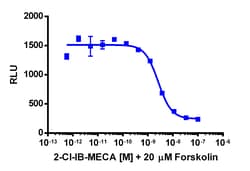
Eurofins Discoverx cAMP Hunter CHO-K1 ADORA3 Gi Cell Line, 2 vials. (95-0101C2)
The cAMP Hunter ADORA3 Gi cell line is a stable, engineered cell line for use in studying drug candidates (small molecules or biologics) targeting GPCRs. This cell line enables assessment of ligand (e.g. adenosine, NECA) based activation of ADORA3 GPCR activity via detection of decreasing levels of intracellular cAMP. This product uses EFC technology. The cells overexpress wild type ADORA3, a naturally Gi/Go coupled GPCR. Upon activation of ADORA3, the decrease in levels of intracellular cAMP leads to a decreased signal from EFC when the cAMP detection kit is applied. This stable modified cell line is provided as two vials of cryopreserved cells. For detailed product information, User Manual and datasheet, visit www.discoverx.com/gpcr.


ATCC FL83B; Hepatocyte; Mouse (Mus musculus)
FL83B is a hepatocyte cell that was isolated from the liver of a 15 to 17 day old fetal mouse in 1969. This cell was deposited by EH Leiter.

ATCC IDH2 mutant-TF-1; Isogenic-Luc2; Erythroleukemia; Human (Homo sapiens)
For-profit organizations: For every order of this item, you must provide a signed Material Transfer Agreement Addendum for Screening Application. We cannot ship this item until we receive this addendum. The person signing the addendum as the principal investigator must match the end user as listed on the applicable sales order for the item.Email the signed addendum to SalesPermits@atcc.org with a reference to both your account and sales order numbers. Once received, your addendum will be reviewed, and this item will be released for shipment if all requirements are met. Additional fees may apply if this product is being used for a screening use (ATCC ACS-2103F), and these fees will be applied after your order is confirmed. If you need assistance with your order, please contact our Customer Care team.

ATCC Bacillus cereus; Strain NRRL B-569; genomic DNA
Genomic DNA isolated from Bacillus cereus strain NRRL B-569. This bacterial strain is also available as ATCC Catalog No. 10876™.


Eurofins Discoverx ChemiScreen FP Prostanoid Receptor Stable Cell Line, 2 vials. (HTS093C)
The ChemiScreen FP Prostanoid Receptor Stable Cell Line is an engineered cell line for use in studying drug candidates (small molecules or biologics) targeting GPCRs. This cell line enables assessment of ligand (e.g. prostaglandin F2a) based activation of PTGFR GPCR activity via detection of increasing levels of intracellular calcium. The included cell line overexpresses PTGFR alongside endogenous high levels of the promiscuous G protein, Gα15, coupling the receptor to the calcium signaling pathway. Upon activation of PTGFR, the resulting calcium activity can be fluorescently assayed. This stable modified cell line is provided as two vials of cryopreserved cells. For detailed product information, visit www.discoverx.com/targets/gpcr-target-biology.

ATCC NCI-H1155; Lung Adenocarcinoma; Human (Homo sapiens)
NCI-H1155 [H1155] is a cell line exhibiting epithelial morphology that was isolated from the lungs of a 36-year-old, White male with carcinoma. This product has applications for cancer research.



Amsbio LLC TLR3/ISRE Leeporter™ Luciferase Reporter-HEK293 Cell Line

TLR3/ISRE Leeporter™ Luciferase Reporter-HEK293 Cell Line
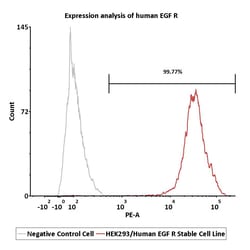
ACROBiosystems HEK293/Human EGF R Stable Cell Line
The epidermal growth factor receptor (EGFR; ErbB-1; HER1 in humans) is the cell-surface receptor for members of the epidermal growth factor family (EGF-family) of extracellular protein ligands. The epidermal growth factor receptor is a member of the ErbB family of receptors, a subfamily of four closely related receptor tyrosine kinases: EGFR (ErbB-1), HER2/c-neu (ErbB-2), Her 3 (ErbB-3) and Her 4 (ErbB-4). Mutations affecting EGFR expression or activity could result in cancer.
Lonza Walkersville HUCPI Hepatocytes Cryo, Cryopreserved Human Hepatocytes, Viability > 80%, Cell Count > 5,000,000 cells/amp, Compatible with 96-well format, Long-term culture > 7 days
HUCPI Hepatocytes Cryo, Cryopreserved Human Hepatocytes, Viability > 80%, Cell Count > 5,000,000 cells/amp, Compatible with 96-well format, Long-term culture > 7 days
Genscript Corporation CHO-K1/CXCR4/G15 Stable Cell
CXCR4 is a receptor for the C-X-C chemokine SDF-1 (Stromal Cell-Derived Factor 1) It is involved in haematopoiesis and cardiac ventricular septum formation and plays an essential role in vascularization of the gastrointestinal tract cerebellar development and survival of hippocampal-neuron of central nerve system CXCR4 also acts as a primary receptor for some HIV-2 isolates and as a co-receptor with CD4 for HIV-1 X4 viruses

ATCC Tb 1; Lung; Bat (Tadarida brasiliensis)
Tb 1 Lu is an epithelial-like cell that was isolated in 1965 from the lung of a female adult bat. This cell line was deposited by AJ Kniazeff, D Constantine, WA Nelson-Rees, and D Schmidt.